Skip to content

Bayanmed is an electronic medical system with artificial intelligence.

One electronic patient record for all specialists.

Reception, doctors, the treatment room and radiology share an outpatient record for each patient. All patient data is stored in one digital system, helping the clinic analyse and improve its internal processes. Data is stored in the standard format of the Republic of Uzbekistan’s Digital Health Platform (FHIR R5).

Demonstration
Outpatient recordForm 025
PatientDilnoza Yusupova
07Room 5
today
  1. 08:12ReceptionCard opened. Patient registration completed successfully.
  2. 08:13ReceptionQueue: specialist Dr. Rahimova, queue number 07.
  3. 09:40DoctorHistory: Episodes of throbbing headache for two weeks, mostly on one side, more often in the evenings. Accompanied by nausea and sensitivity to light, worse with physical activity.
  4. 09:48DoctorDiagnosis: migraine.
  5. 09:52AssistantDrafted: referral for a head MRI, drips, prescription.
  6. 09:54DoctorSigned: referral, prescription.
  7. 10:05NurseTreatment room: drip.
  8. 25.09MRIEarlier study: brain MRI.

Each specialist’s records in a shared database.

Electronic patient records are collected in a shared database in a single format: waiting times, visit lengths and the punctuality of everyone involved in the clinic are visible. Artificial intelligence built into the platform will help you find bottlenecks and improve all of the clinic’s operational processes.

Records
  • Receptionpatient, queue
  • Doctorshistory, diagnoses, prescriptions
  • Treatment roomprocedures, treatment
  • Radiologystudies, reports
  • Lab and documentslab tests, scanning external documents

Shared database: a month at the clinic

Data demonstration · reports for the clinic owner
Average waiting time for a visit, minutes
  • Dr. Saidova14
  • Dr. Rahimova22
  • Dr. Karimov31
  • Dr. Aliyev41
Visit length by reason, minutes
  • Follow-up9
  • Dizziness11
  • Headache13
  • Back pain19

Where delays occur: Dr. Aliyev’s patients wait longest between 10:00 and 11:00 in the morning, when walk-ins and follow-up patients arrive at the same time. Move follow-ups to the afternoon and compare the results in a month.

Uzbekistan’s Digital Health PlatformA shared data model makes it possible to connect to the platform without changing the data format.
Assistant with artificial intelligenceIt will work with your clinic’s shared database and answer questions about any patient or working day at the clinic.

One patient, from reception to the treatment room.

Each step adds an entry to the same record.

  1. 08:12

    Reception opens the patient’s record

    If the patient has visited the clinic before, their existing record opens. A new one is not created.

  2. 08:13

    The patient waits for their turn

    The arrival time is recorded. After a few weeks, these records will help predict the patient’s waiting time.

  3. 09:40

    The doctor sees the patient

    Fills in the record sections (history, examination, diagnosis, recommendations), writes a prescription and orders a course of treatment.

  4. 10:05

    Treatment room

    A nurse records each drip or injection; an electronic grid shows the number of completed and upcoming procedures.

  5. 19:00

    The clinic owner receives a report on the day

    The length of each visit, the patient’s reason for coming, and the medical services provided.

An electronic queue that can analyse how your doctors work.

The patient’s arrival, call to the room and end of the visit are recorded alongside the reason for the visit and diagnosis.

Using these records, the system will predict the waiting time for each walk-in patient and tell them on Telegram when to come.

Room 5, 06.11.2026
WaitingWith the doctorPredicted (next)

Telegram to walk-in patient number 07: “Your turn is around 09:40. Please come by 09:25.”

A multifunctional assistant with artificial intelligence.

Front desk · chatDemo · coming after the main system

Dilnoza Yusupova needs a follow-up with Dr. Rahimova next Tuesday morning. Remind her on Telegram.

Booked: Tuesday 10 November, 10:00, Room 5.
Send this Telegram message?To: Dilnoza Yusupova. “Please come to Room 5 on Tuesday, 10 November, at 10:00.”
Action timeline (FHIR Provenance)
  1. 10:42PersonMalika, front desk, asked the assistant
  2. 10:42AssistantBooked for Tuesday, 10:00, with Dr. Rahimova
  3. 10:42AssistantDrafted a Telegram reminder, awaiting approval
  • The assistant can access only the records of patients its operator has permission to access.
  • Changes it makes within the clinic can be undone.
  • Sending anything outside the clinic requires manual confirmation by a person.
  • Each step identifies who initiated the electronic action: staff member or assistant.

One core. Your specialty plugged in.

Specialty sections are switched on per clinic and bring their own forms and lists. Sections you don’t use stay out of the way.

The core
  • The patient card and its history
  • Queue and booking the next visit
  • Visits, notes and prescriptions
  • Shared database
  • The assistant

Your clinic: the core + ENT + MRI and CT

And the MRI? A QR code instead of film and a disc.

Our system lets you view and process digital CT and MRI images online. You no longer need to download special software or have a disc for your radiology studies.

In the clinic system, each study sits on the patient’s card next to the visits.

Public research MRI: ReMIND (TCIA), CC BY 4.0.
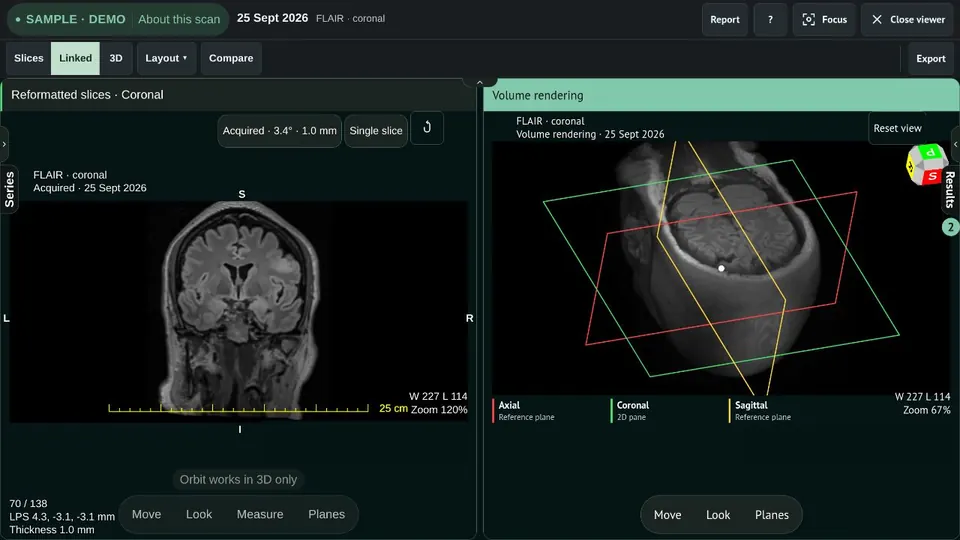
Bayanmed: public research brain MRI demo with a coronal slice and volume renderingOpen this sample in 3D
Your clinic’s name here. Scan to open the MRI.

Rules we build by.

Not tied to our software
Standard FHIR R5 can be read by other systems, so your data is never locked in with us.
Your data stays confidential
No other clinic can find or open your patients’ records, by search or by direct link.
Data is preserved
An edit keeps the earlier version, with who changed it and when.
A reliable backup
Every week we test restoring from the backup, so we know it works before you need it.

The Bayanmed team.

Show the teamHide
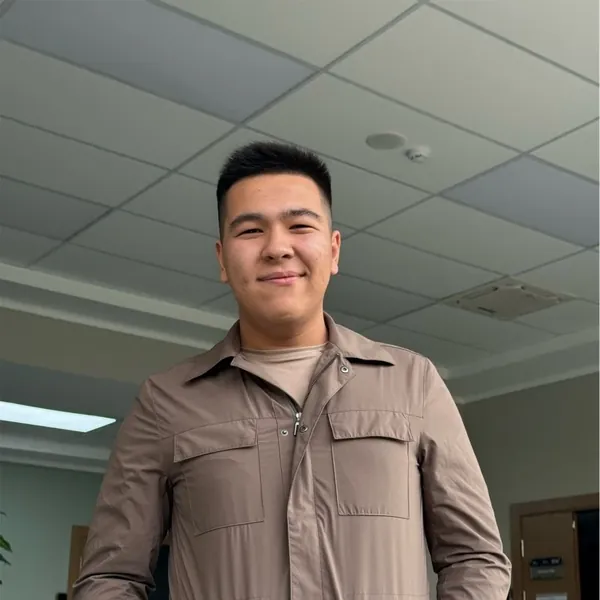
Shoxrux Berdiqobilov

Shoxrux Berdiqobilov

Founder
  • Engineering at RWTH Aachen, with a medicine minor
  • Medical device software at Fraunhofer ILT
  • Health-record data for machine learning, with Sahlgrenska University Hospital
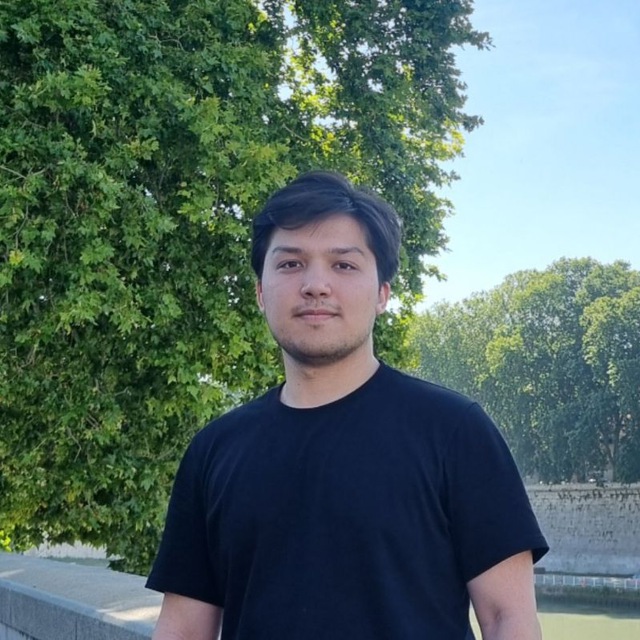
Yosinbek Murtazayev

Yosinbek Murtazayev

Clinic implementation engineer
  • 2 years at UNIDECA: deploys SmallPond, a DNA database platform, at client organizations
  • Trains staff in Uzbek, Russian and English on a system handling highly sensitive data, and resolves access and other issues on site
  • Applied Mathematics at New Uzbekistan University
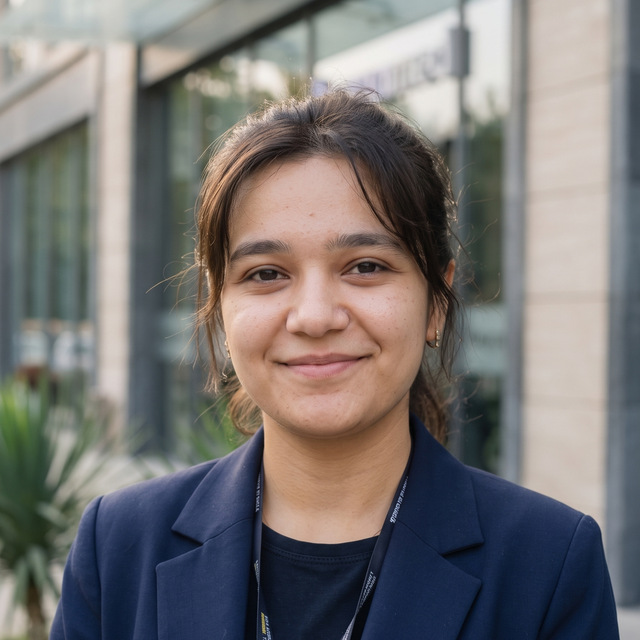
Mukaddas Khusniddinova

Mukaddas Khusniddinova

Machine learning engineer
  • AI engineer at the Central Bank of Uzbekistan: built a scoring model working with confidential data, and AI agents for staff
  • Master’s in Software Engineering and AI at New Uzbekistan University
  • Led and trained Uzbekistan’s national team for the 2026 International Olympiad in AI (one silver, two bronze)
Aziz Imamov

Aziz Imamov

Clinical advisor
  • Physician at University Hospital Essen, Germany
  • Trained and worked as a physician at the RWTH Aachen and Hannover university hospitals
  • Advises Bayanmed on clinical questions

Questions clinics ask.

What is FHIR, and why should we care?

FHIR is the international standard for how a health record is written down. Uzbekistan’s Digital Health Platform uses its R5 version. Keeping your cards in it from the first day means no conversion project when the clinic has to connect.

What about our paper cards?

Coming next: photograph or scan a page, and the system fills a draft for staff to check. The original is kept, linked to what was taken from it.

Do we need to install anything?

No. Bayanmed runs in the browser on the computers and phones you already have.

Our staff have never used a clinic system.

Bayanmed is designed for staff who have never used a clinic system: simple screens, one task each, in Uzbek or Russian. Staff can switch language in the middle of a task.

What does it cost?

Pilot terms are agreed with each clinic. Write to us and we will go through them on the first call.

Can patients use it?

Patients open their scans on a phone today. Next is a Telegram app where patients fill in their details before the visit and hear when their turn is near.

Be one of the first clinics.

Tell us how a day runs at your clinic. We will show you the system using fictional patients and discuss how to run a pilot at your clinic.